Roof Leak Repair in Louisville, KY
A water stain on the ceiling is rarely where the leak actually is. Water runs along decking and rafters before it shows, so the real source is often a cracked pipe boot, lifted flashing at a wall or chimney, storm-damaged shingles or a clogged valley several feet away. 3 Peaks Roofing traces the leak to its source, fixes it properly, and tells you honestly whether a repair is enough or the roof is due for replacement. Every inspection is free and comes with photos.
What We Offer
Most leaks we trace come from one of three places: worn flashing and pipe boots, storm-damaged shingles, or an aging roof that's failing in more than one spot. Here's what we handle.


If the leak came from hail or wind damage, it may be covered. We'll document it with photos and tell you whether an insurance claim makes sense.
Our roof replacement page explains what a new roof involves, and if storm damage caused it, our insurance claims page walks through the claim steps. If a replacement isn't in the budget right now, ask about financing.
How We Find and Fix a Roof Leak
Finding a leak takes patience. Here's how we work through it.
1. Start inside. We look at where the water shows up: the stain, the drip, the damp insulation. If we can get into the attic, we follow the water trail back along the decking and rafters toward where it's coming in.
2. Go up top. On the roof, we check everything uphill of that point: flashing, pipe boots, vents, valleys, shingles and any place two surfaces meet.
3. Photos of what we find. You'll see the source, and anything else we spotted, in pictures.
4. A written estimate. We tell you what the repair involves, and whether we think the roof has other weak spots.
5. Fix the source. We repair the actual cause, not just the area around the stain.
6. Cleanup and walkthrough. We clean up and show you what was done.
Where Roof Leaks Usually Come From
These are the spots we check first:
-
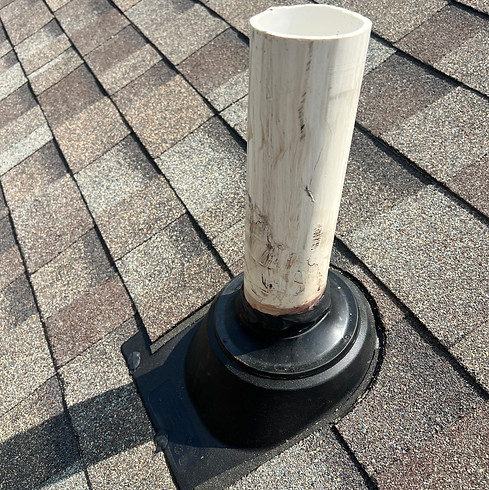
Pipe boots. The rubber collar around a plumbing vent cracks with age and sun. Water runs down the pipe and into the house.
-
Step and counter flashing. Where a roof meets a wall, dormer or chimney, metal flashing directs water away. If it's loose, rusted or was installed poorly, water gets behind it.
-
Chimneys. Beyond the flashing, a missing or damaged flue cap lets water straight in.
-
Valleys. Two roof slopes meeting in a valley carry a lot of water. Worn shingles or debris build-up there causes leaks.
-
Skylights. Failed seals or poor flashing around the frame.
-
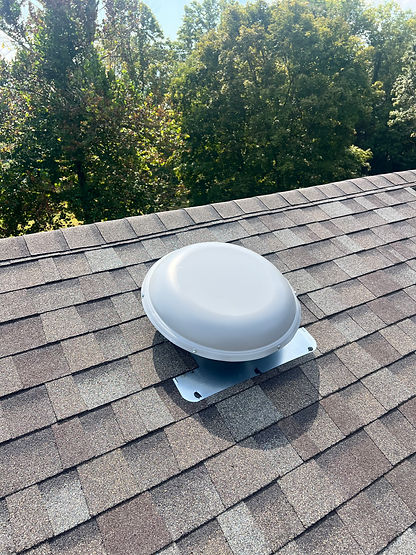
Exhaust vents and ridge vents. Cracked housings or loose fasteners.
-
Storm damage. Hail-bruised or wind-torn shingles. If that's what we find, see our storm damage page.
-
Ice and water at the eaves. In a hard Louisville winter, snow melts and refreezes at the cold roof edge, and that water can back up under shingles.
-
Clogged gutters. When gutters overflow, water can back up at the roof edge and rot the fascia and decking. We also handle gutters.
What to Do While You Wait for Us
You've got water coming in and we're on the way. A few things help:
-
Contain the water. Put a bucket or towels under the drip. If a ceiling is bulging with water, keep people and pets away from it.
-
Protect your belongings. Move furniture, electronics and rugs out of the way.
-
Take photos. Pictures of the stain, the drip and any damage are useful later, especially if you end up filing an insurance claim.
-
Stay off the roof. A wet roof is slippery and dangerous. Leave the climbing to us.
-
Write down when it leaks. Does it only leak in heavy rain? Wind from one direction? After snow melts? That helps us find the source faster.
Why Leaks Get Worse in Kentucky Weather
Louisville's weather works on a leak from every direction.
Winter freeze-thaw. Water that gets into a small gap freezes on cold nights, expands, and opens the gap a little more. A leak that drips in November can pour by March.
Spring storms. Wind-driven rain gets under shingles and flashing that would hold fine in a gentle shower. Hail can bruise shingles and start new leaks.
Summer heat. Heat and sun dry out rubber pipe boots and sealants, which is one reason boots are such a common leak source.
The longer water gets in, the more it costs. Wet decking rots. Wet insulation stops working. Ceilings stain, and mold can grow where you can't see it.
What Homeowners Say
"very responsive and got the job done quickly. The crew did a great job cleaning up after the work was done!" Heather J., 5-star Google review

Repair the Leak or Replace the Roof?
One leak on a roof with plenty of life left is a repair. We fix the flashing, boot or shingles and you're done. Repeated leaks, leaks in several places, soft decking, or a roof near the end of its life usually mean patching is money spent twice. We'll show you photos of what we find and give you written prices for both, so you can decide.

Why Choose Us?
You deal with the owners, not a call center. We explain what we find in plain English, give you a written quote, and won't push a new roof if a repair will do the job. The three points below are how we handle every leak:
Dependable Service
You can trust our team to provide prompt, professional roofing solutions, always keeping your home or business protection as our top priority.
Transparent Communication
We pride ourselves on clear, honest guidance, ensuring you understand every step of your roofing project without surprises.
Superior Quality
Our experts use high-grade materials and advanced techniques to deliver durable, long-lasting roofs backed by reliable warranties.
Roof Leak FAQs
What should I do right now about a leak?
Move valuables, put a bucket under the drip and take photos of any damage. Stay off the roof. Then call us at 502-864-7663 to find the source.
Can you fix just the leak instead of replacing the whole roof?
Usually, yes. If the rest of the roof is sound, we'll repair the source of the leak. We only recommend replacement when repairs won't hold.
Will insurance pay for a roof leak?
It depends on the cause and your policy. Sudden storm damage such as hail or wind is often covered. Gradual wear usually isn't. We'll document what caused it so you can decide whether to file.
Do you repair leaks on flat roofs?
Yes. We repair leaks on shingle, metal and flat roofs, including TPO and EPDM, for homes and commercial buildings.
Why does my roof only leak sometimes?
Some leaks only show up in heavy rain, wind-driven rain from one direction, or when snow melts. Water finds a path only under those conditions. Writing down when it leaks helps us trace it.
How do you find a leak that's hard to locate?
We work from the inside out: where the water shows, then up through the attic, then onto the roof uphill of that spot. Flashing, pipe boots and valleys are the usual suspects, and we check them all.
Can a leak cause mold?
It can. Wet insulation and decking that stay damp can grow mold, often out of sight in the attic. That's another reason not to let a leak sit.
How long does a leak repair take?
Most leak repairs are done in one visit once we've found the source. Bigger repairs, like rebuilding flashing around a chimney, can take longer, and your estimate will say so.
Is a ceiling stain always a roof leak?
Not always. Plumbing, HVAC condensation and attic ventilation problems can also cause stains. If we find the roof isn't the cause, we'll tell you.
Financing Options
for Your Roofing Needs
Our roofing team understand that roof repairs, replacements, or upgrades can be a big investment. That’s why we offer flexible financing options for qualified homeowners and businesses. Our roofing professionals work with you to create manageable payment plans, ensuring your project gets done on time without financial stress. Contact us today for a consultation and estimate.